
At a glance
- Self-serve prompt service
- About $99 a year (StoryWorth)
- Interview and ghostwritten book
- About $899 to $1,799
- Full personal historian project
- Often $3,000 to $10,000+
- Hours in a documentary project
- Around 130
- Peak buying seasons
- Holidays, Mother's Day and Father's Day
Three ways to run it
- Personal historian. You interview the client, then write, edit and design a book or produce a film. Projects commonly run $3,000 to $10,000 or more, but a single documentary can take around 130 hours, so pricing has to reflect the time.
- Done-for-you, at scale. A team interviews by phone and turns the conversation into a book. Prices around $899 to $1,799 are typical, with templates and trained writers keeping hours under control.
- Self-serve software. Customers record or write their own stories in response to prompts, and the product turns them into a keepsake. StoryWorth, the best known, charges about $99 a year for weekly questions and a printed book at the end.
The first model earns the most per client and the least per hour. The third scales furthest. Many businesses combine them: an app for most customers and a premium done-for-you tier for families who want it handled.
Why voice and video matter
Books are the traditional product, but the thing families value most is often the voice itself. A recording keeps the laugh, the accent and the pauses that a transcript loses. Recording-first products also lower the effort for older storytellers, who would rather talk than write.
The strongest products keep the recording, a transcript and photos together on one timeline, and let the storyteller choose who sees each memory and when, including after they are gone.
Who buys, and when
The buyer is usually not the storyteller. It is an adult child or grandchild buying for a parent or grandparent, which makes this a gift purchase. That shapes everything:
- Sell hardest before Mother's Day, Father's Day, birthdays and the holidays.
- Make the gift easy to give: a printable card, a scheduled start date and a simple setup for the recipient.
- Send gentle prompts to the storyteller so the gift actually gets used.
- Make delivery the emotional payoff: sharing a finished memory with the family.
Partnerships work well here: senior living communities, hospices, estate planners, genealogy groups and funeral homes all serve families thinking about legacy.
Keep customers past year one
Subscription memory products lose customers once the gift year ends. Plan the lifecycle from the start: a welcome that gets the first memory recorded quickly, nudges if the storyteller goes quiet, a reminder before the trial or year ends, and a win-back for lapsed accounts. Monthly prompt emails give people a reason to keep going.
Handle stories with care
Families trust you with private, sometimes painful material. Keep recordings private by default, let storytellers control who sees what, offer a way to download everything, and say plainly what happens to the stories if a subscription ends.
The shortcut
Or start with the brand already built
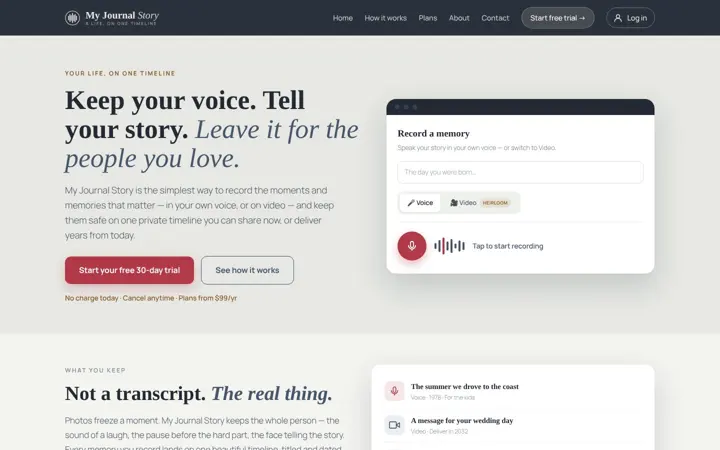
A recording app, a private timeline, recipient delivery and a full set of lifecycle emails take months to build and write. The Burro below has them done.
Questions people ask
What does a personal historian charge?
Full projects such as a written memoir or a documentary often run $3,000 to $10,000 or more, because a single project can take well over 100 hours.
How much do memoir apps cost?
Self-serve services are much cheaper. StoryWorth, for example, charges about $99 a year for weekly prompts and a printed book.
Who buys life story products?
Mostly adult children and grandchildren buying for parents and grandparents, often as a gift for a holiday, birthday, Mother's Day or Father's Day.
Is a life story business profitable?
It can be, but hand-made projects are time-intensive. Templates, trained writers or self-serve software keep the hours under control, and subscriptions need a plan to keep customers after the first year.
Sources
- Proofed: Is StoryWorth worth it? Price, comparison and review
- CNN Money (Fortune Small Business): Preserving family stories as a business
This guide is general information, not legal or medical advice. Rules differ by state and change often, so confirm the requirements with your state boards and a licensed attorney before you open.