
At a glance
- Americans who fished in 2024
- 57.9 million, a record (RBFF)
- Big-box tackle affiliate rates
- Around 3% to 6%
- Brand and fly shop affiliate rates
- Often 8% to 20%
- Typical affiliate cookie
- 14 to 90 days
- Best traffic engine
- Pages people revisit before every trip
Build the reason to come back
Most fishing blogs live on one-time articles. A reader finds a list of the best walleye lures, clicks once and never returns. The sites that compound are the ones anglers check before every trip: river flows, water temperature, lake levels, hatch timing and recent catch reports.
Government stream gauges make that possible. The US Geological Survey publishes streamflow and temperature readings from gauges across the country through its Water Data APIs, and Environment Canada does the same north of the border. A page per water, refreshed through the day, turns a fishing site into a tool, and tools earn repeat visits.
Affiliate income from gear
Affiliate links are the natural first revenue line because readers are already shopping. Rates vary widely:
- Large retailers pay less but convert well. Bass Pro Shops has paid around 5% with a 14-day cookie, and big tackle stores often sit between 3% and 6%.
- Brands and specialty shops pay more. Rates of 8% to 10% are common among fly and tackle brands, and some smaller brands pay 20% with cookies up to 90 days.
- Programs change often, so confirm current terms before you build pages around a partner.
The earning pages are specific: what to throw on a named river this month, the right fly for a hatch, the waders that work in cold spring water. Tie gear to the conditions on the page and the recommendation becomes useful rather than salesy.
Other ways a fishing site earns
- Display ads, once traffic is large enough for an ad network to accept the site.
- Leads for guides, outfitters, lodges and charters, sold per lead or as a featured listing on the waters they fish.
- Sponsored placements from tackle brands and boat makers who want to reach a specific region or species.
- Memberships with extras such as alerts when a river hits a target flow or temperature, saved waters and an ad-free view.
- An email digest of conditions and reports for the waters a reader follows, which also builds a list you own.
Content that holds up in search
Programmatic pages built from live data can rank because the content is the reading itself, which changes constantly and is genuinely useful. Pair them with written guides for the most-fished rivers and lakes, species hubs and seasonal hatch charts, and link them all together so a reader moves from a guide to today's conditions to the gear that fits.
Get the technical basics right early: clean titles, structured data for places and articles, a sitemap that covers every water, and pages that load fast on a phone at the boat ramp.
Where new fishing sites stall
- Writing generic gear roundups that big publishers already own.
- Covering every species everywhere before ranking for anything.
- Leaning on one affiliate partner whose rates can be cut overnight.
- Never building an email list, so every visit depends on Google.
The shortcut
Or start with the brand already built
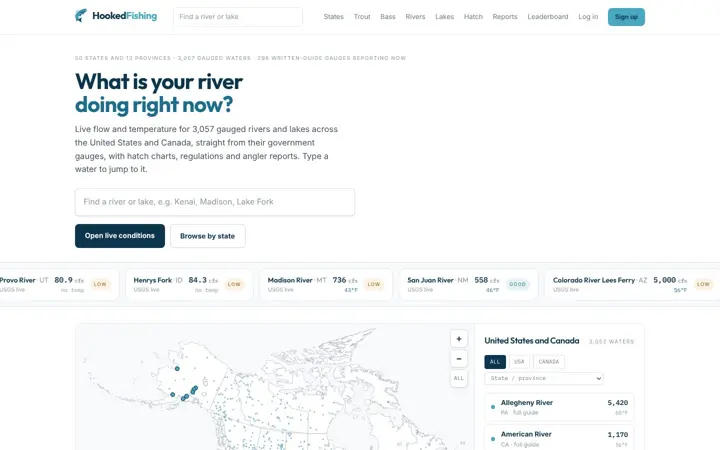
Building thousands of live condition pages, river guides and angler accounts takes months of engineering before the first dollar. The fishing Burro below has it running today.
Questions people ask
Can a fishing website make money?
Yes. The usual income lines are gear affiliate commissions, display ads, leads or listings for guides and lodges, sponsorships and memberships. Sites with reasons to return, like live conditions, earn more than sites built only on one-time articles.
What do fishing affiliate programs pay?
Big-box retailers tend to pay around 3% to 6%, while brands and specialty shops often pay 8% to 10%, and some pay up to 20%. Cookie windows typically run 14 to 90 days.
Where does live river data come from?
In the US, from the USGS network of stream gauges, published through its Water Data APIs. In Canada, from Environment and Climate Change Canada's hydrometric network.
How many people fish in the US?
A record 57.9 million Americans aged 6 and up went fishing in 2024, according to the Recreational Boating and Fishing Foundation.
Sources
- NMMA: Record high fishing participation reached in 2024
- Niche Pursuits: The best fishing affiliate programs
- UpPromote: Fishing affiliate programs
This guide is general information, not legal or medical advice. Rules differ by state and change often, so confirm the requirements with your state boards and a licensed attorney before you open.