
At a glance
- Americans with celiac disease
- About 1 in 100, over 3 million
- Undiagnosed or misdiagnosed
- Up to 83%
- FDA gluten-free threshold
- Under 20 parts per million
- What users want most
- A clear answer and the reason for it
- Strongest growth channel
- Word of mouth in celiac communities
Know who it is for
About 1 in 100 Americans has celiac disease, more than 3 million people, and up to 83% of them are undiagnosed or misdiagnosed. Add people with non-celiac gluten sensitivity and the parents shopping for a diagnosed child, and the audience checking labels every day is large.
These are not casual dieters. They read every ingredient panel, they know the hidden sources of gluten such as malt and some modified starches, and they distrust any tool that gives a verdict without showing its work. Build for them and casual users come along.
Understand the labeling rules
In the US, the FDA set a standard for gluten-free claims in 2013: a food labeled gluten-free, free of gluten, without gluten or no gluten must contain less than 20 parts per million of gluten. The rule covers FDA-regulated foods, including dietary supplements.
That matters for an app in two ways. A product carrying a certified or labeled gluten-free claim is a strong signal. A product with no claim is not automatically unsafe, so the app has to read the ingredient list itself and say clearly when it cannot be sure, rather than guessing.
Show the reasoning, not just the verdict
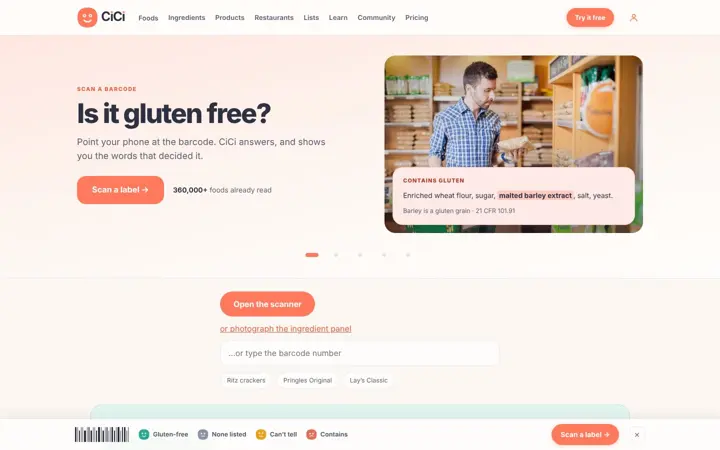
The single feature that separates a trusted app from a forgotten one is explanation. When the app says no, it should point to the exact word on the label that decided it. When it says yes, it should say why. When the label is unclear, it should say so plainly.
- Highlight the ingredient that triggered the answer, in place on the label.
- Name the rule or source behind the call.
- Use three answers, not two: safe, not safe, and can't tell.
- Accept a photo of the label for loose or unbarcoded items.
The data problem
Barcode data is the hard part. Ingredient lists change when manufacturers reformulate, and product databases lag behind. A trustworthy app needs a way to check when a label was last confirmed, accept photos of new labels, and update its answer when the ingredients change.
A searchable set of pages for individual products, brands and dishes does double duty: it answers questions inside the app, and each page can rank for searches like whether a specific cereal or sauce is gluten free.
How it earns
- A free core with a premium tier for extras such as saved lists, restaurant guides and family profiles.
- Partnerships with certified gluten-free brands that want to reach shoppers at the moment of decision, kept clearly separate from the answers.
- Affiliate links to gluten-free products and delivery services.
- Licensing the data or the scanner to retailers, dietitians and food brands.
Whatever the model, never let money touch the verdict. The audience will find out, and trust is the only asset the app really has.
Be careful with claims
Describe the app as a label-reading aid, not a diagnosis or a guarantee. Encourage users with celiac disease to follow their clinician's advice, keep a clear disclaimer, and be honest about the limits of label data.
The shortcut
Or start with the brand already built
Building the scanner, the reasoning layer and a thousand-page product library is the slow part. The Burro below is already live with all three.
Questions people ask
How many people have celiac disease?
About 1 in 100 Americans, more than 3 million people, and up to 83% of them are undiagnosed or misdiagnosed, according to Beyond Celiac.
What does gluten-free mean on a US label?
Under the FDA's 2013 rule, foods labeled gluten-free must contain less than 20 parts per million of gluten. The same standard applies to similar claims such as no gluten.
Can an app tell if a product is safe for celiac disease?
It can read the label and flag known gluten sources, but it cannot test the food. A good app shows its reasoning, says when it is unsure, and tells users to follow medical advice.
How do gluten-free apps make money?
Common models are premium subscriptions, brand partnerships kept separate from the answers, affiliate links and data licensing.
Sources
This guide is general information, not legal or medical advice. Rules differ by state and change often, so confirm the requirements with your state boards and a licensed attorney before you open.