
At a glance
- Private label roasted coffee
- About $9 to $20+ per pound
- Custom printed bag minimums
- Typically 500 to 1,000 bags
- Typical retail, 12 oz bag
- $16 to $22 direct to consumer
- First conversation to first sale
- About 3 to 6 months
- Payback for a brand built from zero
- Often 12 to 24 months
White label or private label
- White label: the roaster's existing blends, packed in your branded bag. Fastest and cheapest way to launch.
- Private label: coffee roasted to your own profile or blend. More distinctive, with higher minimums and more lead time.
Start with one or two products, typically a signature blend and a single origin, and add more once you see what reorders. Before launch, send samples to around 50 people and listen to what they say.
The cost of a bag
Roasted coffee from a private-label roaster usually runs about $9 to $20 or more per pound depending on the beans, the roast and your volume. Price every bag from the full cost stack, not just the coffee:
- Roasted coffee per pound from your roaster.
- The bag, label and one-way degassing valve. The valve is not optional for fresh whole-bean coffee.
- Fulfillment: picking, packing and shipping.
- Platform and card processing fees.
- What it costs you to win a customer.
- The margin you want to keep.
Most direct-to-consumer brands land between $16 and $22 for a 12 oz bag. If the numbers do not work at that price, the fixes are more volume, a premium positioning that supports a higher price, or more wholesale.
Owners who grow large sometimes buy their own roaster later. Small shop roasters sell for around $15,000 to $20,000, and some operators report cutting their coffee cost roughly in half by roasting green beans themselves. That is a stage-two decision, not a launch requirement.
Packaging and labels
Choose stand-up pouches in kraft, matte or foil, with a resealable zipper, tin tie or heat seal and a degassing valve. Custom-printed bags usually carry 500 to 1,000 unit minimums, so many brands start with stock bags and printed labels until volume justifies full print.
A US coffee label needs the product name, net weight and the name and address of the company responsible, often shown as "Distributed by" with your company. Plain roasted coffee generally contains nutrients only in insignificant amounts, which is why most bags carry no Nutrition Facts panel, but flavored or added-ingredient products can change that. Confirm your labels with your roaster, who also needs to hold an FDA food facility registration.
Where the money comes from
- Subscriptions. Coffee is a daily habit, and a subscription turns one sale into twelve. It is the reason a coffee brand can afford to pay for customers.
- Direct sales on your own site, where margin is highest.
- Wholesale to cafes, shops and grocers: lower margin per bag, more volume.
- Offices and corporate gifts: recurring orders and bulk holiday gifting. Coffee is among the gifts clients say they most want to receive.
- Hospitality: a house blend for a restaurant, hotel or venue.
Getting customers
Email is the best-returning channel once you have a list, followed by creator partnerships, Instagram and TikTok, and local press. Paid social works when subscriptions make the lifetime value of a customer high enough to cover the cost of winning them.
The brand does most of the work in coffee. Shoppers cannot taste the coffee before they buy, so the name, the bag and the story have to give them a reason to try it.
The order to do it in
- Shortlist roasters and taste their samples.
- Decide white label or private label and choose one or two first products.
- Build the brand: name, logo, bag design and photography.
- Set up your company, store, payments and subscription option.
- Order bags or labels and your first roast.
- Test with about 50 people and adjust.
- Launch direct, then add wholesale and corporate accounts.
The shortcut
Or start with the brand already built
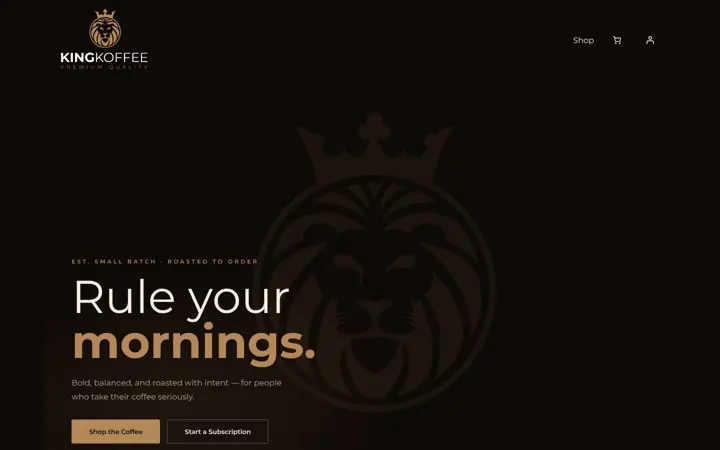
Naming, branding and building a store with subscriptions are most of the work before your first sale. A coffee Burro already has them done, so the remaining step is choosing a roaster.
E-commerce
King Koffee
Small-batch coffee with a crowned-lion brand and a subscription offer.
E-commerce
Gift Loft
Corporate gifting on demand, from one box to two thousand.
Questions people ask
Do I need my own roaster to start a coffee brand?
No. Most new brands use a private or white label roaster that roasts and packs for them. Buying a roaster makes sense later, when volume is high enough that roasting yourself saves real money.
How much does private label coffee cost?
Roasted coffee from a private-label roaster typically costs about $9 to $20 or more per pound, depending on beans, roast and volume, plus packaging and any setup fees.
What should I charge for a bag of coffee?
Most direct-to-consumer brands sell a 12 oz bag for $16 to $22. Work back from your full cost per bag, including packaging, fulfillment, fees and marketing, before you set a price.
Does a coffee bag need a nutrition label?
Plain roasted coffee usually qualifies for the exemption for foods with insignificant amounts of nutrients, so most bags have no Nutrition Facts panel. Flavored coffee or added ingredients can change that, so confirm with your roaster.
Sources
- Birch Coffee Wholesale: How to start a white label coffee business
- Bellwether Coffee: Private label coffee, how it works and what it costs
- Postal: Corporate gifting statistics
This guide is general information, not legal or medical advice. Rules differ by state and change often, so confirm the requirements with your state boards and a licensed attorney before you open.